
Crawl Space Encapsulation & Vapor Barrier in Brea, CA: What It Costs and Why Older Homes Here Need It
Crawl space encapsulation in Brea typically costs $4,500 to $12,000 depending on square footage, access height, and whether you’re adding insulation and a dehumidifier. Most Brea homes under 1,800 square feet fall in the $5,500 to $8,500 range for a full 12-mil vapor barrier system with sealed seams and taped stem wall coverage. We finish most Brea encapsulation jobs in two to three days, including floor joist insulation where needed. Call (714) 793-0570 for a free crawl space inspection, and we’ll give you an exact number before any work starts.
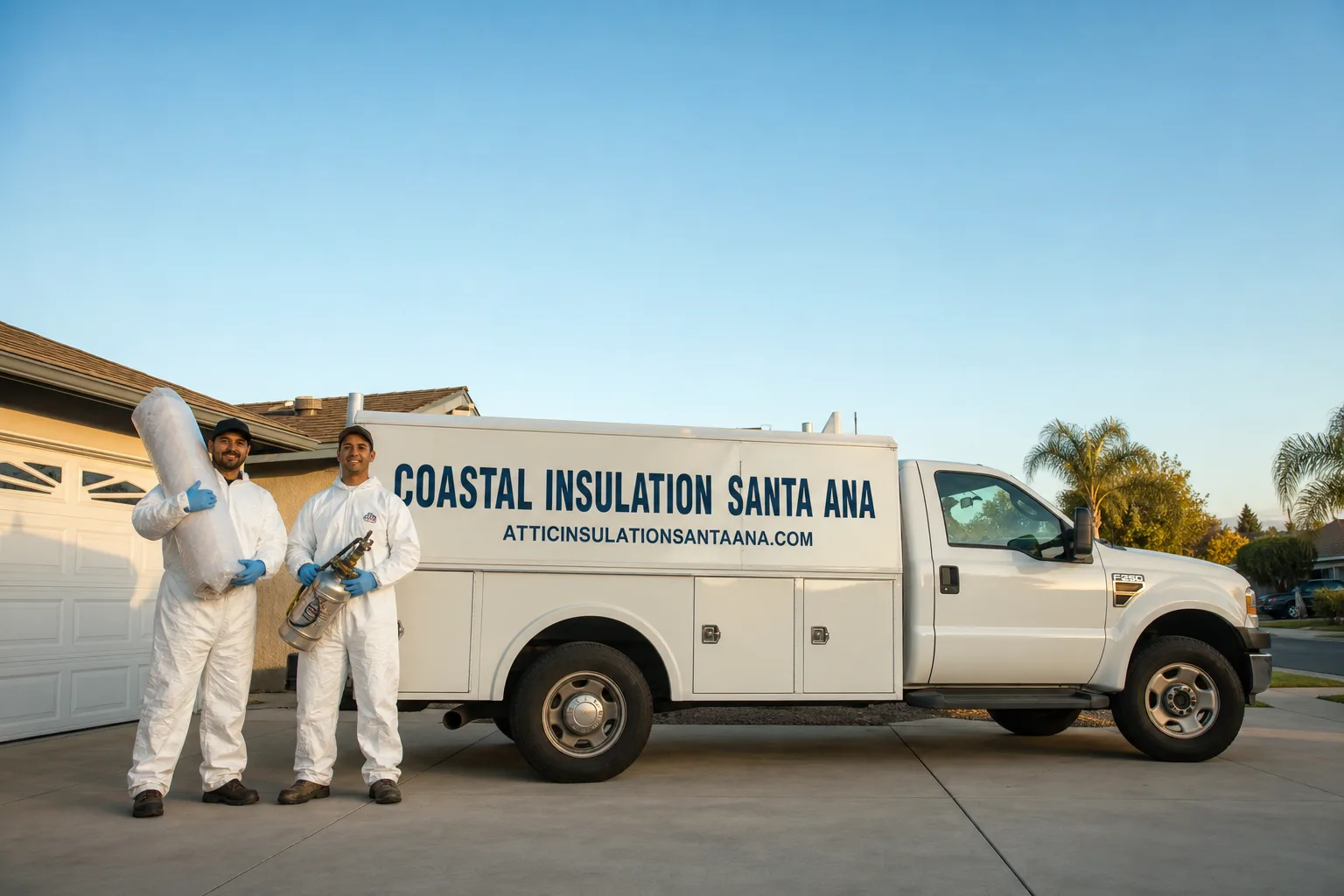
Ruben Castellano, owner of Coastal Insulation Santa Ana, personally runs or oversees every crawl space job we take in Brea. That matters when you’re dealing with a 60-year-old ranch home near downtown or a stucco hillside house in Olinda Ranch where the soil itself is part of the problem. You get the person who diagnosed the job also doing the work, not a sub crew guessing at it.
Brea’s Housing Stock Makes Crawl Space Encapsulation a Different Job Than It Is in Anaheim or Fullerton
Brea isn’t the same climate as the rest of Orange County. The city sits inland, past the marine layer that keeps Fullerton and Anaheim cooler and more stable. Summer highs routinely push into the mid-to-upper 90s, and the older flatland ranch homes from the 1950s through 1970s were built well before Title 24 energy codes required any kind of ground moisture barrier. Those homes sit on raised crawl spaces with open vents, and the combination of inland heat, exposed dirt, and minimal ventilation means moisture migrates upward into floor framing all summer long. By September, we routinely see hardwood floors cupping and rim joists sweating in homes east of Brea Boulevard that have never had a vapor barrier installed.
Then there’s Carbon Canyon. Each fall, Santa Ana wind events funnel through the northern part of Brea with enough force to create negative pressure under vented crawl spaces. That draws dry, dust-heavy air up through unsealed rim joists and into the living space. Homeowners near the Olinda Ranch and Blackstone hillside tracts report dust settling on floors within days of a wind event, even with windows closed. Coastal cities ten miles south don’t see this, because they don’t have a canyon wind corridor feeding them.
One more Brea-specific factor: the hillside neighborhoods off Carbon Canyon Road and around Olinda Ranch were built on and around the historic Brea-Olinda Oil Field. Homes there often have crawl spaces and foundation soils that still carry petroleum hydrocarbon odors. A standard 6-mil vapor barrier tears during routine cleanouts, and a torn barrier in oil-adjacent soil lets those vapors drift up through floor systems. Our Brea clients on the hills get a heavier 12-mil reinforced barrier with sealed seams and a perimeter seal that runs up the stem walls. Nothing generic about it.
What We Actually Do in a Brea Crawl Space
We start every job the same way: Ruben or one of our lead techs goes under the house, measures the square footage, checks the access point, tests the soil moisture, and photographs everything. You get a written scope with a fixed price. Here’s what the work covers for most Brea homes.
Crawl Space Vapor Barrier
A vapor barrier is the baseline fix. In Brea’s flatland ranch homes, the original floor framing sits over bare dirt that absorbs moisture from the hot inland air. We install a 12-mil reinforced vapor barrier across the entire dirt floor, overlap the seams 12 inches, and seal them with heavy-duty tape. We run the barrier up the stem walls and mechanically fasten it. For Brea homes near the canyon, we also seal the crawl space vents, because open vents are what let Santa Ana wind pressure pull soil dust and moisture into the living space.
Crawl Space Encapsulation
Encapsulation is the full system: vapor barrier, sealed vents, rim joist air sealing, and rigid foam or spray foam on the foundation walls. In Brea’s 1950s and 1960s ranch homes, rim joist sealing is the difference between a clean crawl space and one that keeps wicking moisture and dust into the house all winter. We’ve done dozens of encapsulations in the tracts north of Imperial Highway and around the Brea Creek corridor, where foundation walls are old and porous. Encapsulation turns the crawl space into a conditioned, sealed space instead of a dirt basement.
Crawl Space Insulation
Most Brea crawl spaces have either no insulation or original fiberglass batts that have slumped out of the joist bays and wicked moisture. We install Rockwool Comfortbatt in the rim joist cavities because it resists moisture, doesn’t support mold, and holds its shape in the damp conditions common under Brea’s older homes. In hillside homes with higher moisture loads, we pair Rockwool with closed-cell spray foam in hard-to-reach rim joist bays. The goal is to stop the canyon wind from pulling conditioned air out of the house through the floor.
Crawl Space Moisture Control
Moisture control is the ongoing piece. After encapsulation, we check humidity levels. If a Brea home in a low-lying section near Imperial Highway or Lambert Road has persistent dampness, we’ll recommend a dehumidifier sized for the square footage. We also inspect drainage around the foundation. In older Brea neighborhoods with original galvanized plumbing, a slow slab or stucco leak can re-saturate an encapsulated crawl space within months. We find the source before we recommend adding equipment, because a dehumidifier over a standing leak is just a very expensive fan.
Trusted Materials We Use in Brea Crawl Spaces
We work with specific products because they do specific jobs, not because a distributor gave us a volume discount. In Brea, where summer soil heat and fall canyon winds create a different moisture profile than coastal OC cities, we lean on Rockwool Comfortbatt for rim joist work and Icynene closed-cell foam for tight, hard-to-reach rim bays in hillside foundation walls. For vapor barriers, we carry 12-mil and 20-mil reinforced products and pick the gauge based on whether the crawl space will see foot traffic during future cleanouts.
If your Brea home has had a previous encapsulation that’s failing, we can pull the old barrier, inspect the joists, and install a new system with proper seam sealing. We keep materials stocked for fast turnaround in Brea, and we don’t ask you to wait on a supply house order from Los Angeles.
Common Crawl Space Problems We See in Brea
- No vapor barrier at all. Most pre-1990 flatland ranch homes in Brea were built with bare dirt crawl spaces. Summer heat drives moisture upward into floor framing, and within five years you get buckling hardwood, musty smells, and mold on floor joists. This is the most common fix we do in central Brea.
- Torn or inadequate 6-mil barriers on hillside homes. Olinda Ranch and Blackstone homes built on former oil field terrain often have exposed soil that off-gasses petroleum hydrocarbons. A thin builder-grade barrier tears during cleanouts and leaves unsealed paths for vapors to reach the living space.
- Open crawl space vents sucking in wind-driven dust. Santa Ana wind events through Carbon Canyon create negative pressure under homes with open vents. Dust and soil particles get pulled up through unsealed rim joists. We see this most often in the neighborhoods off Carbon Canyon Road and Lambert Road.
- Slumped, moisture-wicked fiberglass batts. Homes built in the 1960s and 1970s often have original fiberglass batts in the floor joist bays. Decades of moisture exposure make them sag, separate from the subfloor, and turn into a mold substrate. We remove and replace them before installing any vapor barrier.
Pricing for Crawl Space Encapsulation & Vapor Barrier in Brea
Here’s what we quote in Brea, based on the jobs we’ve done across the city in the last few years.
- Crawl space vapor barrier only (12-mil, sealed seams, stem wall coverage): $2,800 to $5,500 for a typical 1,200 to 1,800 square foot ranch.
- Full encapsulation with rim joist sealing: $6,500 to $12,000, depending on access height and whether we’re sealing vents and insulating foundation walls.
- Crawl space insulation add-on (Rockwool or closed-cell foam in rim joists): $1,800 to $4,200.
- Dehumidifier installation: $1,400 to $2,600, installed and wired.
- Crawl space cleanout before encapsulation (debris, old fiberglass, rodent droppings): $800 to $2,000, depending on depth and access.
Every Brea job gets a free on-site inspection and a written quote. We don’t charge for the quote, and Ruben walks you through what’s actually needed, not what pads the invoice. Call (714) 793-0570 and we’ll schedule the crawl space inspection within days, not weeks.
We Serve Brea and the Cities Around It
Our Crawl Space Encapsulation & Vapor Barrier in Brea work takes us across the city, from the flatland ranch tracts near downtown to the hillside homes in Olinda Ranch and Blackstone. We also handle crawl space jobs in La Habra, Placentia, Yorba Linda, and Villa Park. If you’re within 20 minutes of our Santa Ana shop, we can usually be at your door within one to two business days for an inspection.
Serving Brea, CA — Our Local Coverage Area
We’re based in the Brea area and know this community well. Use the map below to see our service coverage — if you’re nearby, we can almost certainly help.
FAQs: Crawl Space Encapsulation & Vapor Barrier in Brea
Brea’s combination of inland summer heat and lack of a coastal marine layer drives more moisture migration into crawl spaces than Anaheim, which sits closer to the coast and gets cooler night air and heavier morning fog that moderates soil evaporation. Anaheim homes of the same era might get away with vented crawl spaces. A Brea ranch on bare dirt absorbs and holds more summer heat, which pulls moisture from the soil upward into the floor framing all season. That’s why encapsulation is a more common need for Brea homes, especially the flatland ranch tracts built before Title 24 codes existed. If you’re not sure whether your crawl space needs it, call (714) 793-0570 and we’ll inspect it for free.
Yes, it’s normal for that area. Olinda Ranch and Blackstone were built on and around the historic Brea-Olinda Oil Field, and soil in parts of those hillside tracts still off-gasses petroleum hydrocarbons. A standard 6-mil vapor barrier is not enough there; foot traffic during cleanouts tears it, and the tear lets vapors through. We use a heavier 12-mil reinforced barrier with sealed seams and mechanical fastening at the stem walls, and we recommend rim joist sealing so soil gases don’t get pulled into the living space. Call (714) 793-0570 to have us assess your home specifically; hillside crawl spaces in Brea need a different sequence than flatland ones.
Carbon Canyon acts as a wind funnel during Santa Ana events each fall, and the wind creates negative pressure under homes with open crawl space vents. That negative pressure pulls dry, dust-heavy air up through unsealed rim joists and into the living space. In coastal OC cities that don’t have a canyon wind corridor, this doesn’t happen. In Brea’s northern neighborhoods, the fix is sealing crawl vents and rim joist bays as part of the encapsulation, not just laying a vapor barrier over the dirt. If you’ve noticed dust settling on floors within days of a Santa Ana event, your rim joists are likely leaking. We can fix that.
The first thing we check is structural and moisture loading: we look for standing water, plumbing leaks, and the condition of the original floor joists. A 1968 split-level near downtown Brea almost certainly has original fiberglass batts that have slumped and wicked moisture, so we inspect those before laying any barrier. We also check access height; some split-levels in central Brea have crawl spaces under three feet, which affects what materials we can physically install and how long the job takes. Call (714) 793-0570 for an inspection and we’ll give you a written scope with those details.
It can, but the energy savings in Brea come mostly from air sealing, not from the vapor barrier alone. A 1950s ranch with open crawl vents and unsealed rim joists is leaking conditioned air into the crawl space all summer. In Brea’s inland heat, the air conditioner is running hard, and any leakage pushes that cost up. Sealing the rim joists and crawl vents as part of the encapsulation stops that. The vapor barrier handles moisture; the air sealing handles energy. We don’t promise exact savings percentages, because every home is different, but you’ll notice the floor feels warmer in winter and the house stays cooler in July. For an exact assessment of your crawl space, call (714) 793-0570.
Get a Free Crawl Space Inspection in Brea
If you live in Brea and you’ve been putting off the crawl space because you don’t know what’s under there, that’s exactly why you should call us. Coastal Insulation Santa Ana has been working in Brea long enough to know the difference between a flatland ranch over bare dirt and a hillside home over oil field soil. Ruben Castellano will be on site for your inspection, and he’ll be the one doing or directing the work if you hire us. Call (714) 793-0570 and we’ll get you a free estimate, a written scope, and honest answers about what your crawl space actually needs.
Written by Ruben Castellano, Owner at Coastal Insulation Santa Ana, serving Brea and surrounding Orange County cities.