
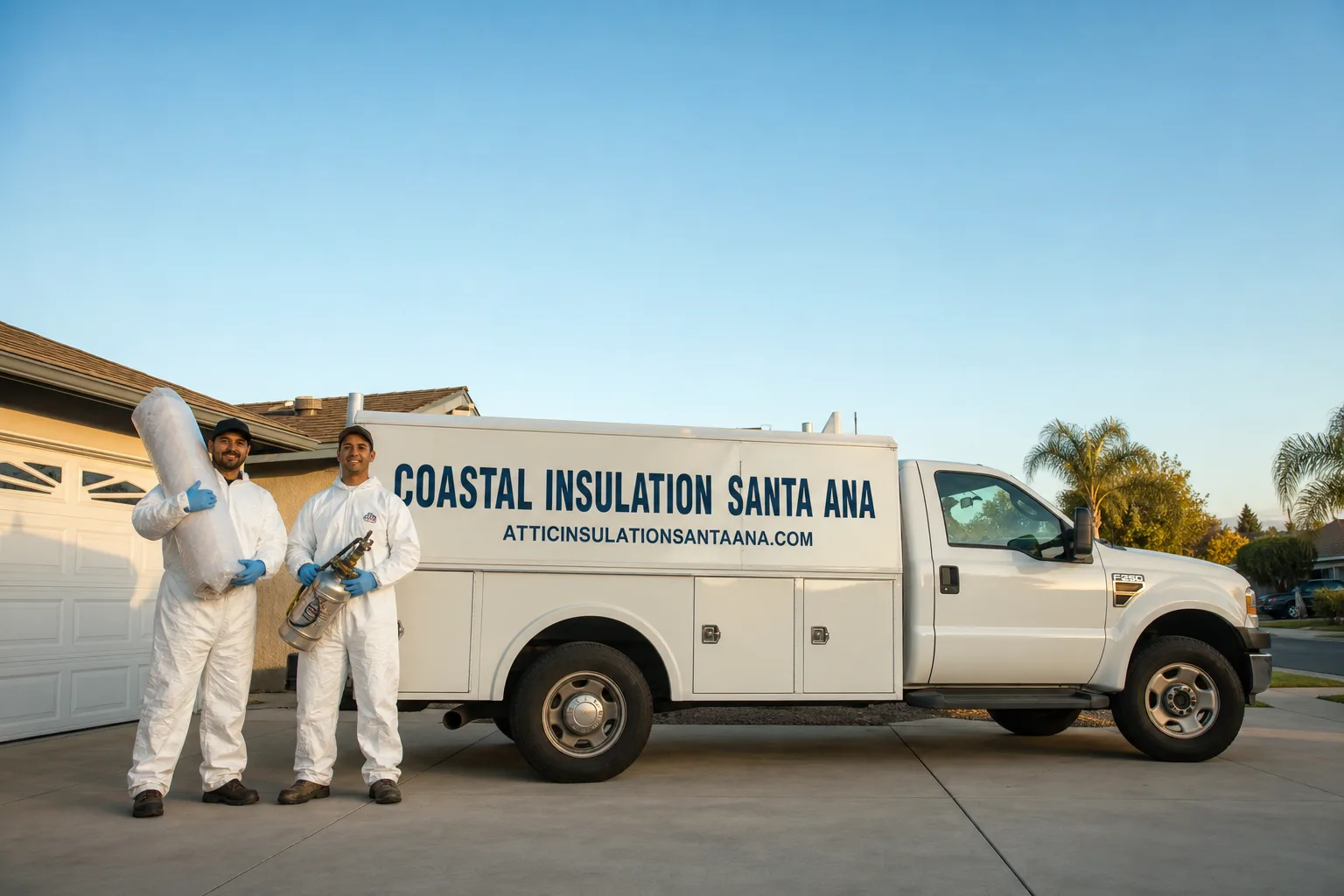
Fast, Reliable Attic Insulation Across Villa Park
Attic insulation in Villa Park means working on custom estate homes that were almost all built before California energy codes required meaningful ceiling R-values. Most of these homes carry original R-11 fiberglass batts, roughly one-third of today’s R-38 minimum, and that gap shows up as second-floor bedrooms hitting 85°F by mid-afternoon every summer. Our Attic Insulation team handles full retrofits, top-ups, and replacements across Villa Park regularly, and we quote every job after walking the attic, not from a satellite photo. Call (714) 793-0570 for a free estimate.
Why Coastal Insulation Santa Ana Is Villa Park’s Preferred Attic Insulation Company
Villa Park homeowners tend to research before they call. They want to know what’s actually in their attic, why it’s failing, and who exactly will be doing the work. We answer those questions directly because Ruben Castellano, the owner, is the lead installer on every project. Not a sales rep who hands the job to a crew. The person who walks your attic, writes your quote, and explains the material choice is the same person on-site running the install.
That matters in Villa Park specifically because the homes here are not cookie-cutter. Custom framing, vaulted ceilings, room additions built in 1985, detached guest quarters with their own roof lines. A crew that’s only installed tract-home blown-in fiberglass will get lost on the first day. We’ve worked in enough Villa Park attics to know what’s waiting before we open the hatch: compressed batts, disconnected baffles, knee-wall pockets nobody has touched since the Eisenhower administration. If you’re in Villa Park and want someone who knows this housing stock, call (714) 793-0570.
Our Attic Insulation Services in Villa Park
Blown-In Attic Insulation
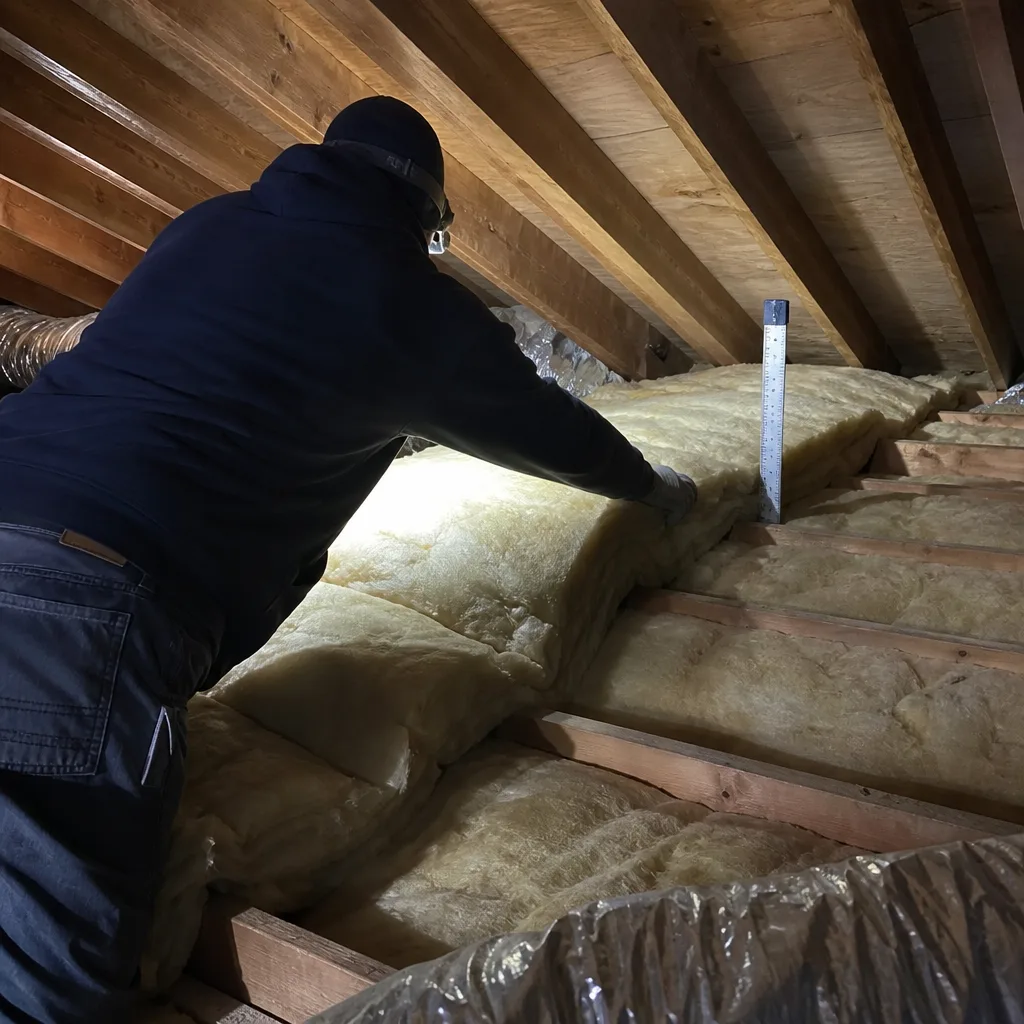
Blown-in cellulose or fiberglass is the most common retrofit for Villa Park’s sprawling ranch footprints because it fills irregular cavities and covers top plates without leaving gaps. We typically blow to R-38 or R-49 depending on your ceiling configuration. For GreenFiber cellulose, that’s roughly 11 to 14 inches of settled depth. The material choice matters here – we spec GreenFiber in places where the attic floor is uneven and where air movement through framing is a concern.
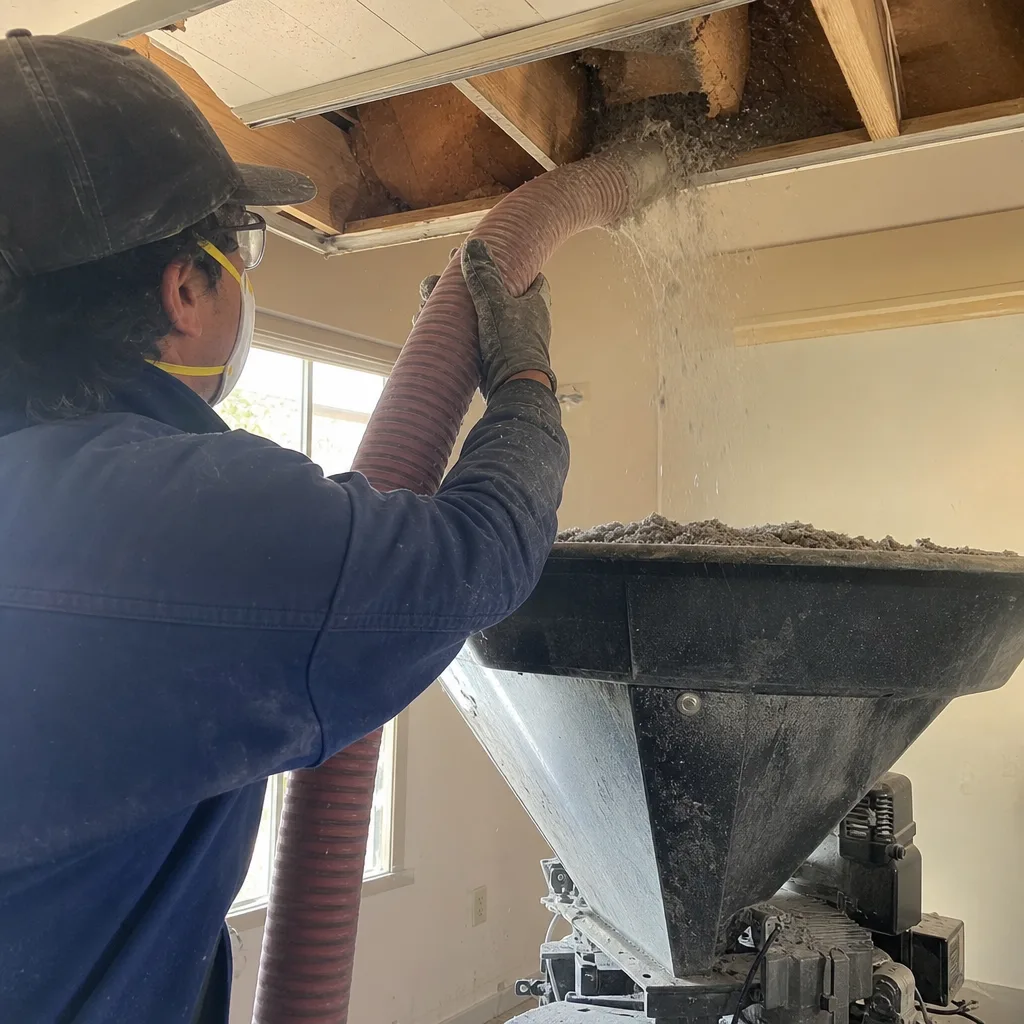
Attic Batt Insulation
Batt insulation still makes sense in certain Villa Park applications, particularly in knee-wall pockets behind vaulted ceiling sections and in framed wall cavities that separate conditioned space from attic dead zones. We install Johns Manville and CertainTeed fiberglass batts in these transitions, along with Knauf mineral wool where homeowners want the added fire resistance that matters in the foothill interface zones around Villa Park.
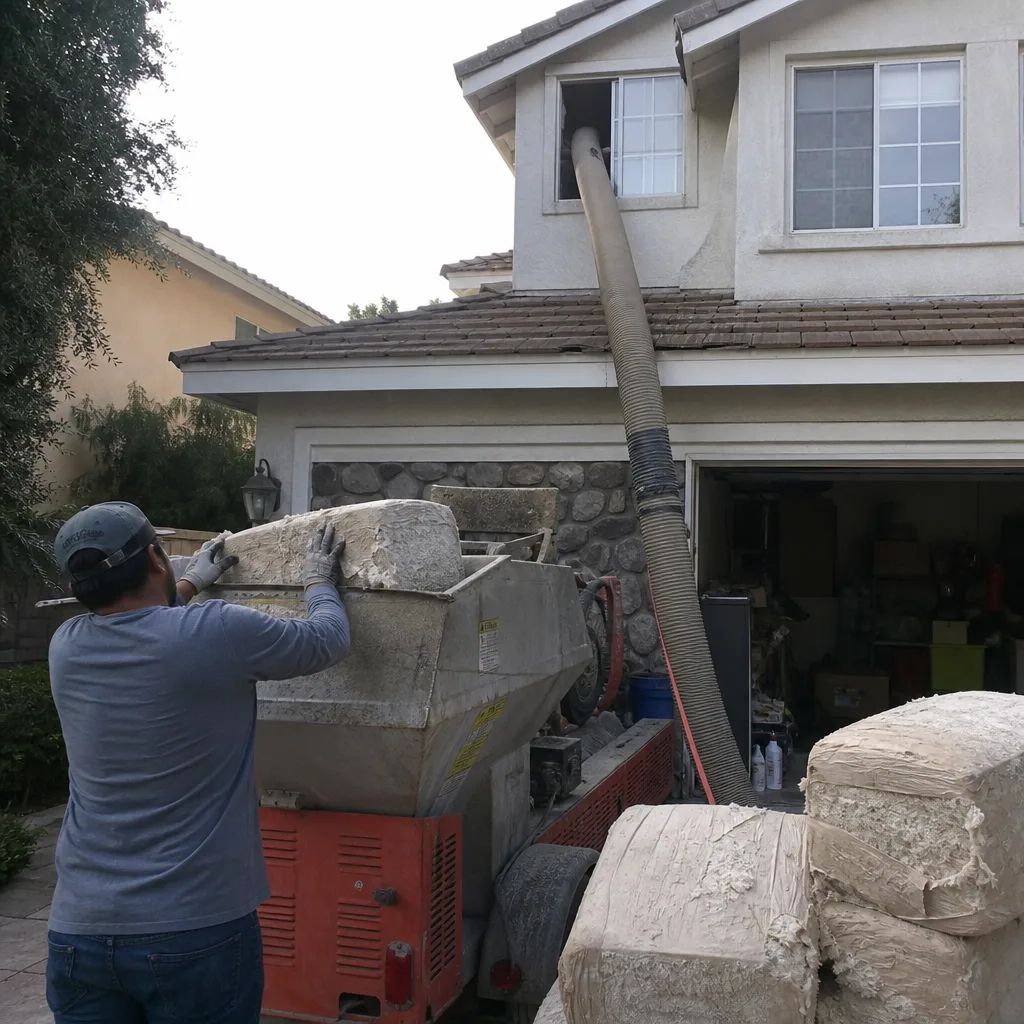
Attic Insulation Top-Up
Top-up installation is the right option when existing batts are intact but under-spec. However, in Villa Park homes from the 1960s and 70s, we rarely recommend simply blowing over old R-11 fiberglass without addressing the underlying air leaks and baffle deficiencies first. A blind top-up can leave the thermal boundary compromised. We’ll tell you honestly if a top-up is viable or if a removal and replacement is the better long-term fix.
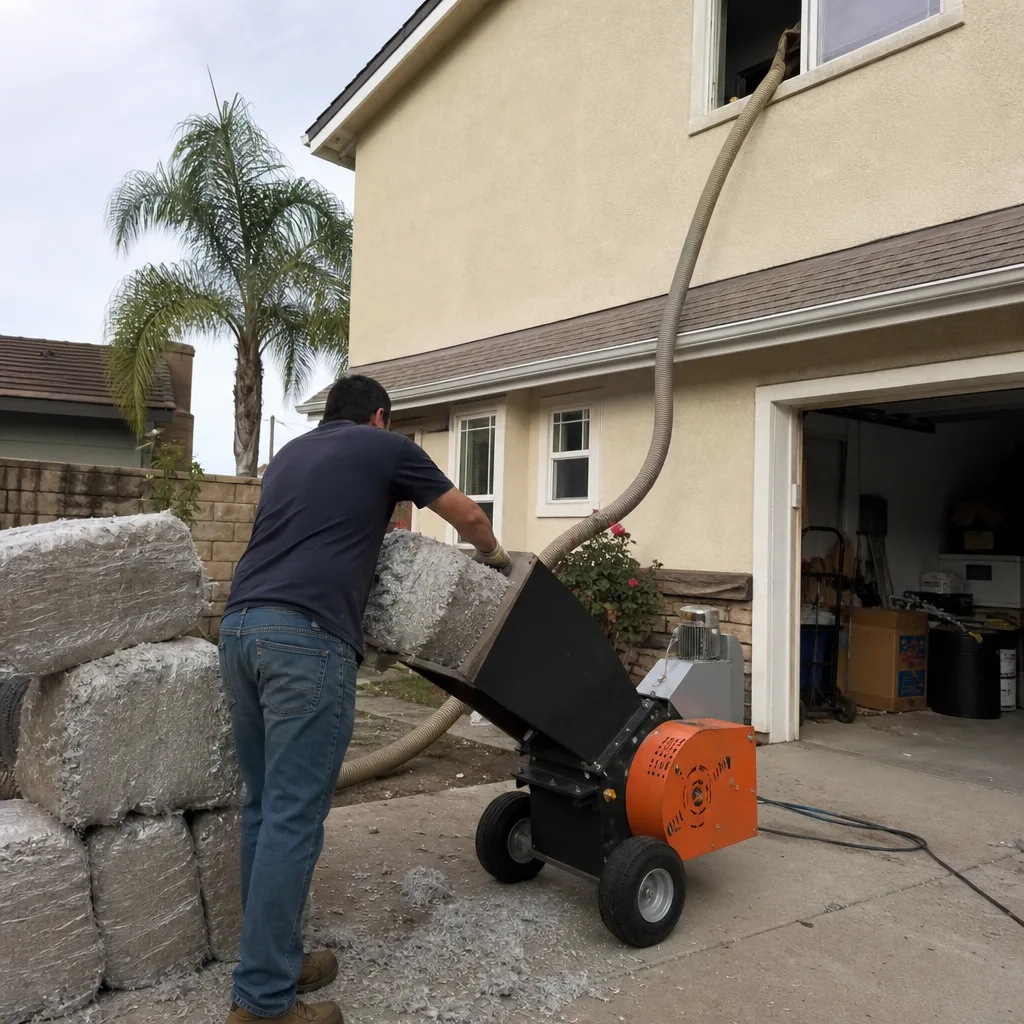
Attic Insulation Replacement
Most Villa Park estate homes we see that were built in the 1960s or 70s are carrying original R-11 batts that have compressed to R-8 or R-9 over six decades. Replacement is usually the answer. We remove the degraded material – especially where rodents have nested or where moisture has saturated the fiberglass – then air-seal the top plates, install new baffles, and blow fresh material to current code. This is the highest-leverage single upgrade you can make on a custom ranch home in Villa Park.
What happens when you call
- 1
A real person answersNo phone trees — you reach a local pro.
- 2
You get an upfront price rangeHonest numbers before anyone is dispatched.
- 3
A background-checked tech heads outLicensed & insured, dispatched right away.
- 4
You approve before work beginsNothing starts until you say go.
Trusted Brands We Service in Villa Park
We install eight industry-leading brands, which means the material decision gets made for your specific attic conditions rather than whatever we happen to have stocked. In Villa Park, that plays out in real ways. Knauf mineral wool goes into vaulted ceiling transitions where fire resistance and sound attenuation matter. GreenFiber cellulose goes into uneven attic floors where loose-fill coverage is critical. Johns Manville and CertainTeed fiberglass batts go into knee-wall pockets and wall cavity transitions. Rockwool goes into detached guest quarters and room addition roof decks where we want additional mass against radiant load. You don’t have to know the difference – we do. But we’ll explain it before we install anything.
Common Attic Insulation Problems We See in Villa Park Homes
- Original R-11 batts compressed to R-9 or worse. Every 1960s and 70s ranch in Villa Park we’ve inspected has this same pattern: fiberglass batts that have slumped in the joist bays and lost most of their loft. By summer, attics that need to stay below 120°F are running 130–140°F, driving heat straight down into living spaces.
- Vaulted and cathedral ceiling attics with dead knee-wall pockets. Custom Villa Park homes love vaulted cedar ceilings – and those ceilings leave narrow triangular spaces where insulation sags from the roof deck and creates bare, hot-roof cavities. These aren’t accessible from the main attic, so standard insulation crews skip them entirely.
- Room additions and detached guest quarters disconnected from main attic ventilation. Additions built in the 1980s and 90s in Villa Park rarely tie their roof framing into the original attic’s ventilation path. The result is unvented, sealed-off roof voids that bake above occupied rooms and can’t be fixed without a targeted approach.
- No baffles, or baffles installed wrong, at the eaves. When attics lack proper baffles at the soffit vents, blown-in insulation blocks the intake airflow and turns the attic into a stagnant oven. On sprawling single-story ranches with long eave lines – which is nearly every home in Villa Park – this failure is widespread.
Pricing for Attic Insulation in Villa Park, CA
Attic insulation costs in Villa Park run higher than in neighboring Santa Ana or Tustin because the homes are larger, the attic access is tighter, and the framing is custom. A top-up of blown-in fiberglass over existing batts on a 2,000 sq ft ranch typically lands between $1,800 and $2,800. Full removal and replacement – taking out original R-11 batts, air-sealing top plates, installing baffles, and blowing to R-38 or R-49 – runs $4,200 to $7,500 depending on attic size and accessibility. Attic baffle and ventilation prep as a standalone service in Villa Park runs $600 to $1,400. Contact us at (714) 793-0570 for a free, on-site estimate. We’ll give you a written number before any work begins.
We Also Serve Cities Near Villa Park
Beyond Villa Park, we work regularly in Placentia, Yorba Linda, Santa Ana, and Tustin. Each city has its own housing stock quirks – tract homes in Tustin, newer builds in Yorba Linda – but the one constant is that older attics everywhere in this corridor are leaking conditioned air. If you’re in one of these cities and need attic insulation, same team, same owner-led install.
Serving Villa Park, CA — Our Local Coverage Area
We’re based in the Villa Park area and know this community well. Use the map below to see our service coverage — if you’re nearby, we can almost certainly help.
FAQs – Attic Insulation in Villa Park
Yes, they need baffles because original Villa Park construction typically has open soffit vents at the eaves, and blowing insulation directly against those vents will block intake airflow and freeze attic ventilation. Baffles preserve a clear air channel from the soffit to the attic interior. On sprawling single-story ranches with long eave lines – the dominant Villa Park housing type – missing or inadequate baffles are one of the most common attic defects we find, and they must be corrected before insulation can be properly installed.
Yes, a top-up can work if the existing batts are still intact, dry, and free of rodent damage, and if the air-sealing and baffle work has been addressed first. What doesn’t work is blowing new insulation over compressed, degraded batts that have slumped into the joist bays and left gaps at the top plates. In Villa Park’s pre-1978 homes, we find original R-11 batts have lost 25-30% of their loft, so we always inspect before recommending a top-up. Call (714) 793-0570 for an honest assessment.
Santa Ana winds pressurize attics and push outdoor air through every gap in the ceiling plane – around top plates, through can light penetrations, around plumbing stacks – accelerating heat infiltration into living spaces. In Villa Park, where foothill wind corridors are stronger than on the coastal plain, attic air-sealing is not optional. Even well-insulated attics in Villa Park lose performance during Santa Ana events if the ceiling plane hasn’t been sealed.
Yes, detached guest quarters almost always need separate treatment because their roof framing is typically disconnected from the main attic’s ventilation system. In Villa Park, guest quarters and room additions from the 1980s and 90s were often built with no eave intake ventilation and unsealed roof decks, creating enclosed, unvented voids that heat like ovens. These spaces require their own baffles, their own ventilation path, and often a much thicker insulation layer to compensate for the lack of cross-ventilation.
For ceiling insulation, California’s current Title 24 code requires R-38 minimum in most ceiling applications – which translates to roughly 12 to 14 inches of blown-in fiberglass or 10 to 11 inches of cellulose. Many Villa Park attics with vaulted ceilings and complex framing need R-49 blown-in to compensate for thermal bridging and irregular cavity depths. The right number depends on your ceiling type, not on a generic table.
Written by Ruben Castellano, Owner at Coastal Insulation Santa Ana, serving Villa Park with owner-led attic insulation installation.