
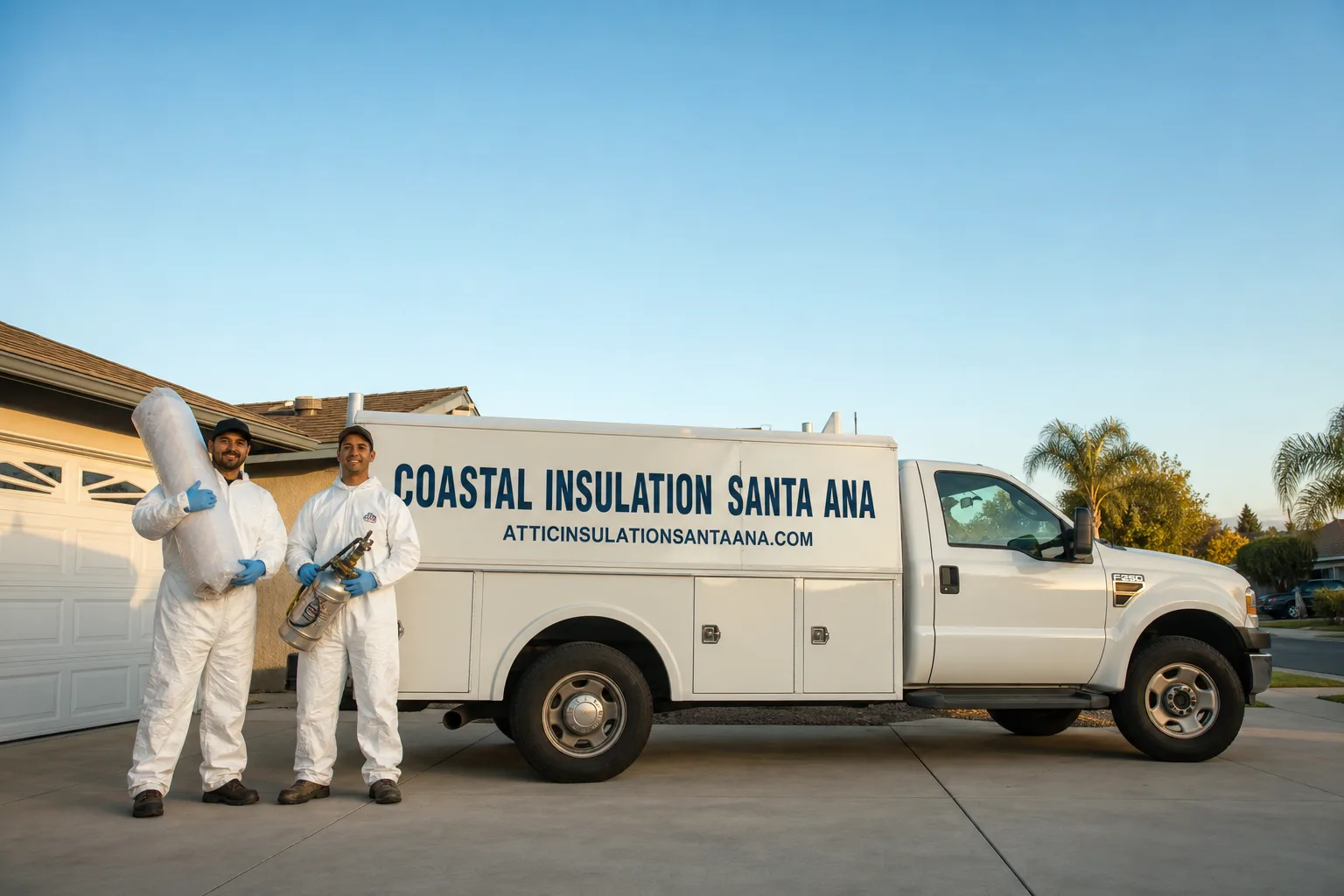
Fast, Reliable Attic Insulation Across Fountain Valley
If your Fountain Valley home was built between 1962 and 1978, there’s a good chance your attic is still riding on the original R-7 to R-11 fiberglass batts the builder dropped in when the coastal breeze was considered insulation enough. We’re Coastal Insulation Santa Ana, and we’ve spent years working inside the ranch homes and split-levels that define Fountain Valley’s housing stock. We know these attics: the shallow cavities, the low-slope rooflines, the marine layer moisture that behaves differently here than it does 15 miles inland. If you’re ready to get your attic insulated right, call Ruben at (714) 793-0570 for a free estimate. We’re usually in Fountain Valley neighborhoods within a day or two of your call.
Why Coastal Insulation Santa Ana Is Fountain Valley’s Preferred Attic Insulation Company
Fountain Valley homeowners call us because we don’t send a sales rep to measure and then hand the job to a crew we’ve never met. Ruben Castellano owns Coastal Insulation and works as the lead installer on every project. When you book an attic insulation job in Fountain Valley, the person who quotes it is the person who climbs into the attic. That matters when you’re dealing with a 1960s ranch with 14 inches of clearance at the ridge and original batts that have compressed to the thickness of a bath towel.
Our Attic Insulation team has handled hundreds of jobs across Orange County, and Fountain Valley accounts for a disproportionate share of our trickiest retrofits. The flat and low-slope rooflines on those original tract homes create conditions that installers who mostly work in Anaheim or Irvine simply haven’t had to solve. We have. We also stock materials for Fountain Valley customers from our Santa Ana shop, so there’s no week-long wait when we identify a problem mid-job and need additional baffles or a different insulation product.
Our Attic Insulation Services in Fountain Valley
Blown-In Attic Insulation
Blown-in fiberglass or cellulose works well in many Fountain Valley homes, but only if the attic actually has the clearance for it. On taller homes, we can blow to R-38 or R-49 without thinking twice. On a low-slope 1960s ranch near Mile Square Park, we’ve seen cavities that top out at 14 inches, which means standard blown-in equipment setups and depth assumptions don’t translate. We verify clearance before we quote, not after we’ve started.
Attic Batt Insulation
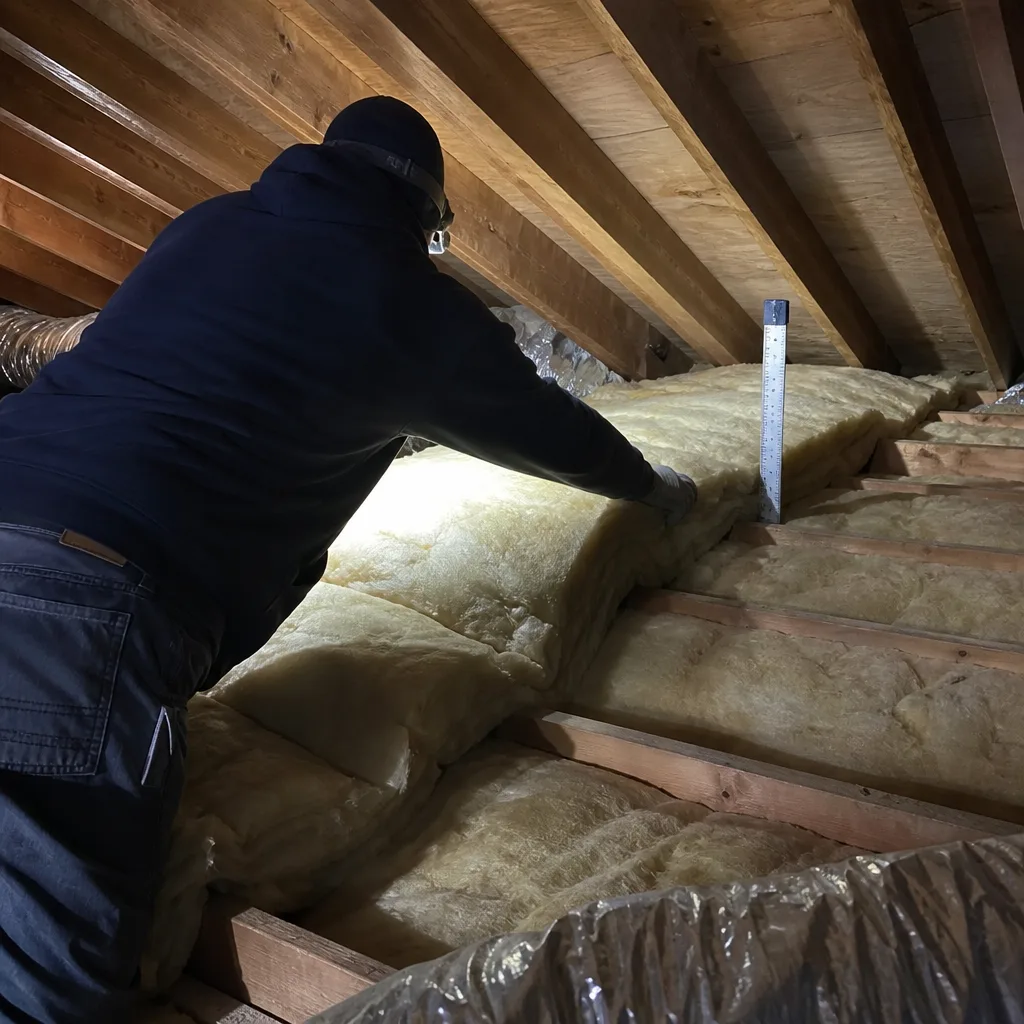
Batt insulation remains a solid choice for Fountain Valley attics with enough headroom and regular joist spacing. We work with Johns Manville and Knauf fiberglass batts, and Rockwool mineral wool when fire resistance is a priority. The catch in Fountain Valley is that many original ranch homes have irregular rafter spacing or truss layouts that make standard-width batts a battle. Our crew cuts and fits on site, which is slower but correct. We also address the compressed original batts that never should have stayed in place this long.
Attic Insulation Top-Up
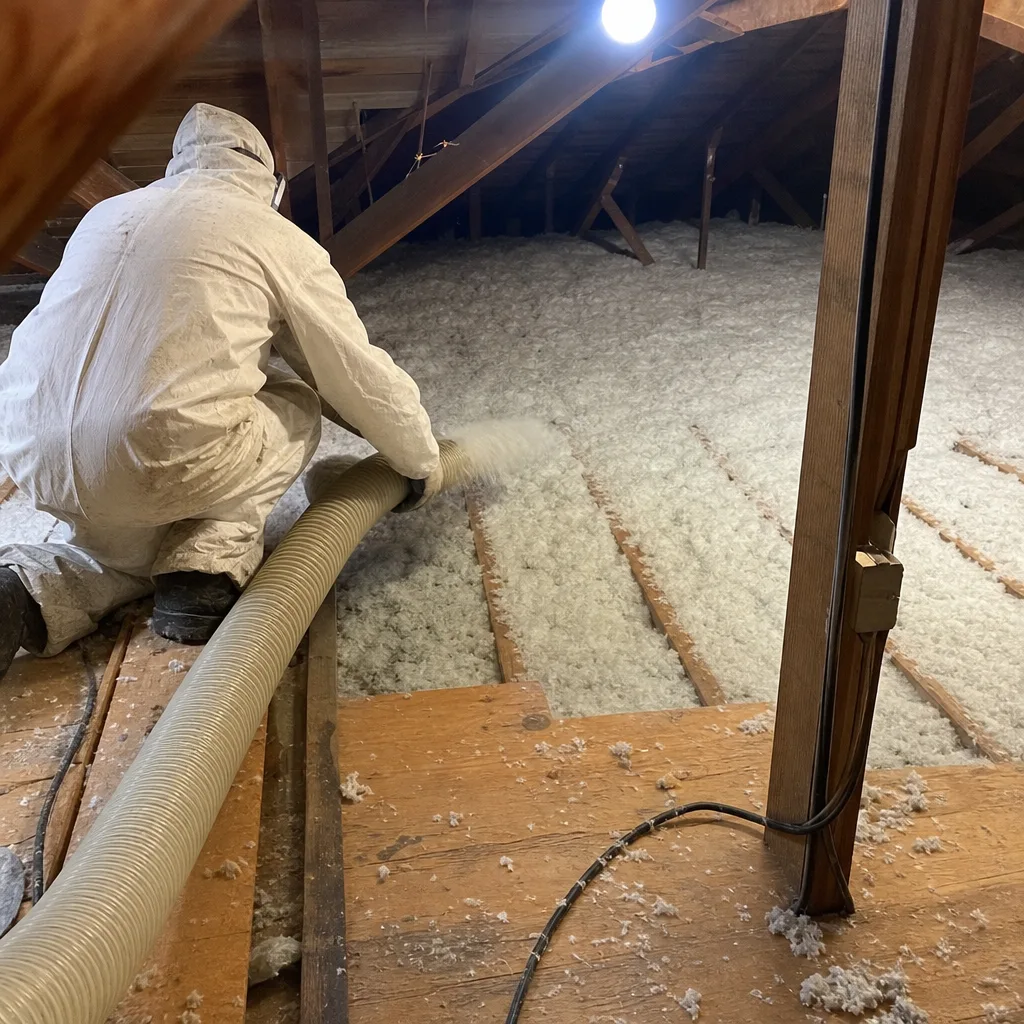
A top-up in Fountain Valley usually means adding blown-in insulation over existing batts to reach current code levels. But here’s what you need to know: if those existing batts are original to a 1962-through-1978 build, they’ve likely compressed to R-5 or less and may have trapped moisture from decades of coastal humidity. Adding 10 inches of new insulation on top of a compromised base layer won’t fix the problem and can fail a Title 24 inspection. We’ll tell you honestly whether a top-up will work or whether replacement is the better call.
Attic Insulation Replacement
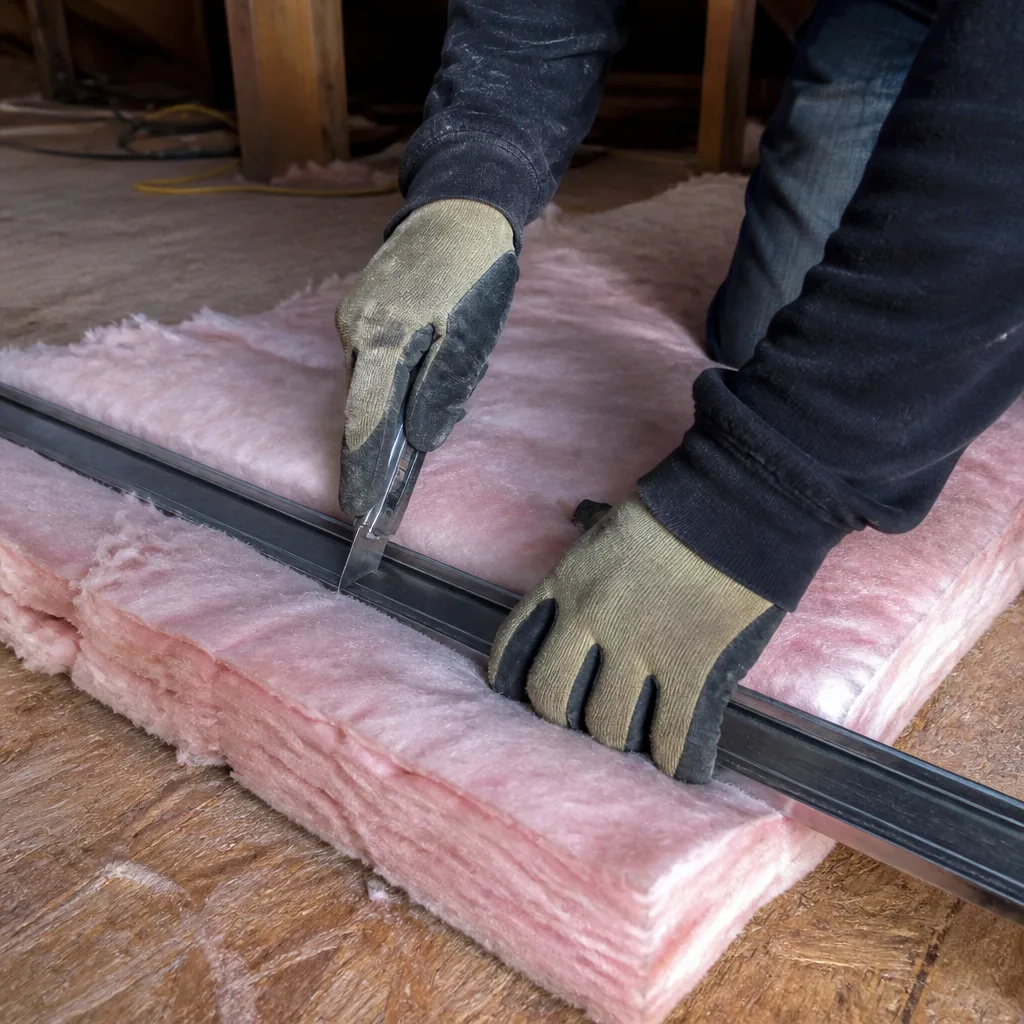
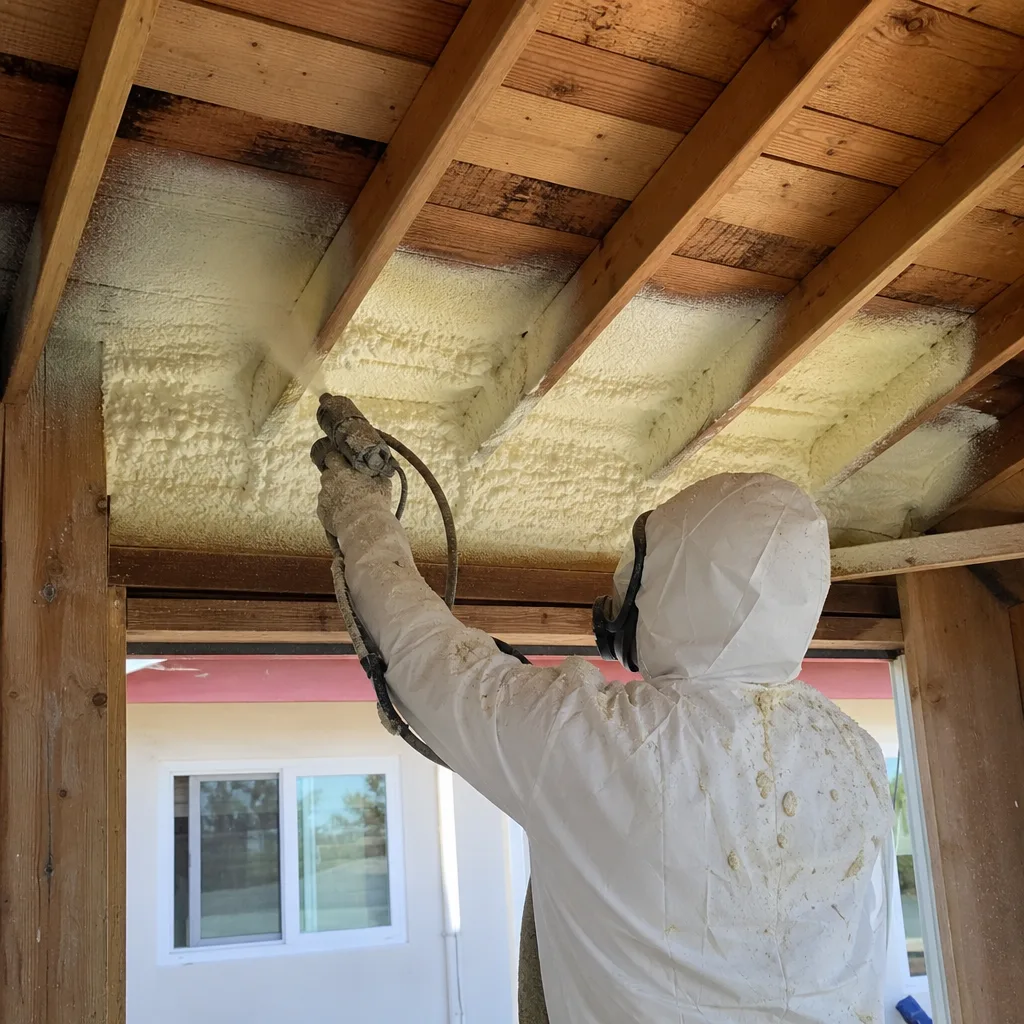
Most of the work we do in Fountain Valley falls into this category. The original fiberglass in these ranch homes was thin to begin with, and after 50-plus years of compression, rodent activity, and moisture exposure, it’s doing almost nothing. We remove the old material, inspect the attic floor and roof deck, air seal where needed, and install new insulation matched to the specific conditions of your home. Closed-cell spray foam from Demilec or Icynene is frequently the right answer for those shallow, low-slope cavities where loose-fill would block eave vents and trap moisture against the roof deck.
What happens when you call
- 1
A real person answersNo phone trees — you reach a local pro.
- 2
You get an upfront price rangeHonest numbers before anyone is dispatched.
- 3
A background-checked tech heads outLicensed & insured, dispatched right away.
- 4
You approve before work beginsNothing starts until you say go.
Trusted Brands We Service in Fountain Valley
We’re not tied to a single manufacturer, which means we select the product that fits your Fountain Valley home’s conditions rather than whatever’s loaded on the warehouse shelf. We install Johns Manville and Knauf fiberglass where cost-effective thermal performance is the goal. We turn to Rockwool mineral wool when clients want added fire resistance and sound dampening. CertainTeed products come out for specific retrofit scenarios. What this means for you is a straight answer about why a particular material is being recommended for your attic, not a generic pitch.
Common Attic Insulation Problems We See in Fountain Valley Homes
- Shallow attic cavities from low-slope 1960s rooflines. Homes built with flat or near-flat roofs simply don’t have the vertical space that a typical Anaheim or Irvine home does. When standard blown-in insulation gets overfilled in these spaces, it blocks eave vents and traps coastal humidity against the roof deck. That’s a recipe for sheathing rot and mold, not just energy loss.
- Compressed original R-7 to R-11 fiberglass batts. Decades of storage boxes, holiday decorations, and foot traffic have flattened these batts to a fraction of their intended thickness. The thermal layer that’s left is so thin that adding a top-up on top of it still won’t pass a Title 24 inspection.
- Empty 2×4 wall cavities in ranch homes. Fountain Valley’s original tract homes were framed with 2×4 studs and often shipped without any wall insulation at all. The mild coastal climate gave builders cover for skipping it. But when you renovate today, Title 24 requires those walls to meet current R-values, and an attic-only retrofit leaves the house non-compliant. We see this constantly during remodel permit reviews.
- Coastal humidity in low-ventilation attics. Sitting about five miles inland from the Pacific in Climate Zone 8, Fountain Valley gets persistent marine layer moisture that you just don’t deal with in inland cities. Vapor management and moisture-resistant products matter more here, especially in attics with limited airflow and minimal clearance.
Pricing for Attic Insulation in Fountain Valley, CA
Here are honest numbers for Fountain Valley’s market. Blown-in attic insulation to reach R-38 in a typical 1,200-to-1,600-square-foot ranch runs $1,800 to $2,900, depending on existing conditions and whether we’re removing old material. Attic batt insulation installation runs $1,500 to $2,600 for the same footprint. An attic insulation top-up runs $900 to $1,700 when the existing base layer is usable. Full attic insulation replacement, including removal and disposal of old material, runs $2,400 to $4,200. Closed-cell spray foam for low-slope cavities priced per board foot typically lands between $2.50 and $4.00 per board foot installed. If you’re dealing with a shallow 1960s attic, expect the higher end of these ranges because the work takes longer and often involves baffle installation and ventilation correction. Call (714) 793-0570 for an exact quote. Estimates are free, and Ruben will be the one walking your attic.
We Also Serve Cities Near Fountain Valley
Based in Santa Ana, we’re a short drive from every Fountain Valley neighborhood, and we regularly work in Attic Insulation in Fountain Valley plus Westminster, Stanton, and Newport Beach. If you’re in one of those cities, the same owner-installed standard applies.
Serving Fountain Valley, CA — Our Local Coverage Area
We’re based in the Fountain Valley area and know this community well. Use the map below to see our service coverage — if you’re nearby, we can almost certainly help.
FAQs — Attic Insulation in Fountain Valley
They fail because the original builders installed R-7 to R-11 fiberglass batts, or sometimes nothing at all, at a time when Southern California’s mild climate was treated as a substitute for insulation. Today’s Title 24 standards for Climate Zone 8 require substantially higher R-values in both attics and walls. When a Fountain Valley homeowner pulls a remodel permit and the inspector finds original compressed batts or empty wall cavities, the project can’t pass final sign-off until the insulation is brought up to code. Call (714) 793-0570 and we’ll assess what your remodel will trigger before you pull the permit.
Yes. Fountain Valley’s location in California Climate Zone 8 means persistent marine layer humidity and onshore flow for much of the year. A low-slope attic has minimal air volume and often limited ventilation, so moisture that would dissipate in a taller, better-vented attic can linger against the roof deck. That’s why we frequently recommend closed-cell spray foam on the roofline for these homes rather than loose-fill on the attic floor, which can block the few vents that do exist and trap moisture exactly where you don’t want it.
Sometimes, but only if the attic’s peak height is sufficient and the eave vents can be protected with proper baffles. Many of Fountain Valley’s low-slope ranch homes have peaks under 18 inches, and some are much shallower. In those cases, blowing insulation to a uniform R-38 is physically impossible without blocking airflow, and the correct solution is usually closed-cell foam on the roofline instead. On a 1963 ranch near Mile Square Park, we measured 14 inches at the peak before quoting and switched the plan to foam for exactly this reason. Call (714) 793-0570 and we’ll verify your actual clearance before recommending anything.
It means adding new blown-in insulation over the existing layer to bring the total R-value up to current standards. But if that existing layer is original R-7 to R-11 fiberglass from 1965, it’s probably compressed, dusty, and possibly moisture-damaged. Adding insulation on top won’t restore its performance and may not satisfy a Title 24 inspector. In most Fountain Valley ranch homes we evaluate, full replacement is the honest recommendation. We’ll tell you if a top-up is genuinely viable or if you’d be throwing money at a failed base layer.
The most reliable way is to remove an outlet cover on an exterior wall and look beside the electrical box, or have us do it during an assessment. If you see no insulation, your wall cavities are likely empty, which was standard practice for many of Fountain Valley’s 2×4-framed ranch homes built before energy codes had teeth. Empty walls mean your attic insulation is doing all the thermal work, and even a well-insulated attic can’t fully compensate for uninsulated exterior walls. We can dense-pack those cavities with blown-in products as part of a full retrofit.
Written by Ruben Castellano, Owner at Coastal Insulation Santa Ana, serving Fountain Valley and surrounding Orange County cities.
Get Your Fountain Valley Attic Insulation Quote
If you’re ready to stop wondering whether your attic is doing its job, call (714) 793-0570 today. Ruben will answer or call you back, schedule your free attic assessment in Fountain Valley, and tell you straight what needs to happen. No sales pitch, no pressure. Just the information you need and insulation installed by the person who quoted it.