
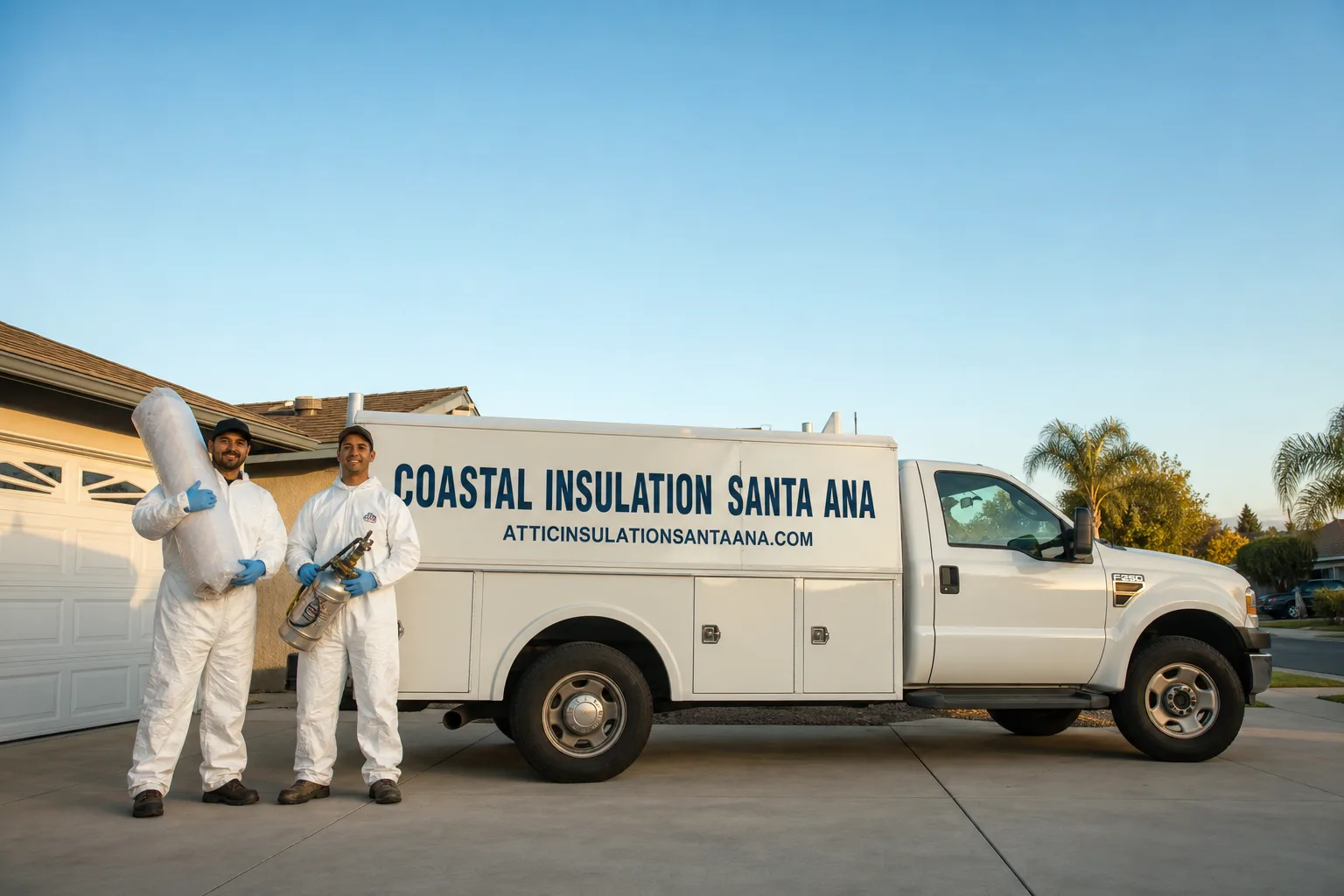
Fast, Reliable Attic Insulation Across La Habra
Attic insulation replacement in La Habra runs $1.85–$3.40 per square foot for blown-in fiberglass, with a typical 1,400 sq ft postwar home landing between $2,600 and $4,750 for full removal and re-insulation. Our crews are in La Habra nearly every week, and we can usually have a technician in your attic within 48 hours of your call. La Habra’s older tract homes weren’t built for the heat load they carry now, and we’ve spent years learning exactly what fails in these attics and what actually fixes it. Call (714) 793-0570 for a free attic inspection and a straight answer on what your house needs.
Why Coastal Insulation Santa Ana Is La Habra’s Preferred Attic Insulation Company
Ruben Castellano, our owner, is the person who shows up to your house, climbs into your attic, and runs the blower hose himself. That’s the difference La Habra homeowners consistently tell us they notice: no salesperson who disappears after the contract is signed, no unsupervised crew guessing at what the job needs. When we quote an Attic Insulation project on a 1950s tract home off Whittier Boulevard, Ruben is the one measuring joist depth, checking soffit baffles, and deciding whether your existing batts are worth saving or need full tear-out.
We work in La Habra constantly — from the flat mid-century streets around El Centro-Lions Park up to the hillside homes off Harbor Boulevard that back against the Puente Hills. La Habra homeowners have specific problems with their attics that don’t show up the same way in Brea or Fullerton, and we’ve built our approach around that reality. When you call us, you’re getting a contractor who understands why your northern-facing attic is losing insulation faster than your neighbor’s house three blocks south.
Our Attic Insulation Services in La Habra
Blown-In Attic Insulation
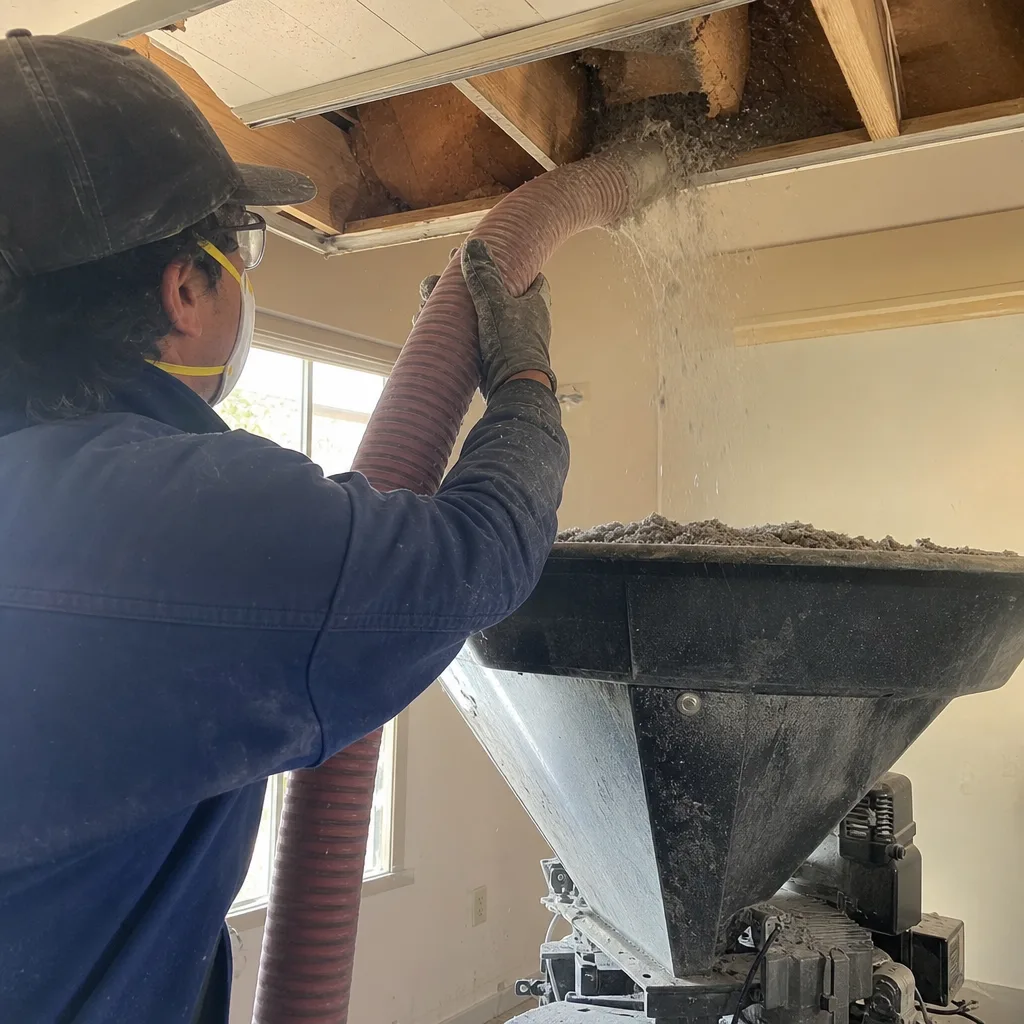
Most La Habra attics we inspect are candidates for blown-in insulation rather than batts, and there’s a reason for that. The irregular joist spacing in homes built between 1948 and 1978 means pre-cut batts rarely fit tight against framing, leaving gaps that become airflow channels. Blown-in fiberglass or cellulose fills those voids completely, including around electrical boxes, plumbing stacks, and the awkward angles where truss members meet ceiling joists. For La Habra’s older homes, we typically specify blown-in insulation to R-38 or R-44, which addresses both the summer heat gain from inland temperatures and the winter infiltration driven by Santa Ana winds.
Attic Batt Insulation
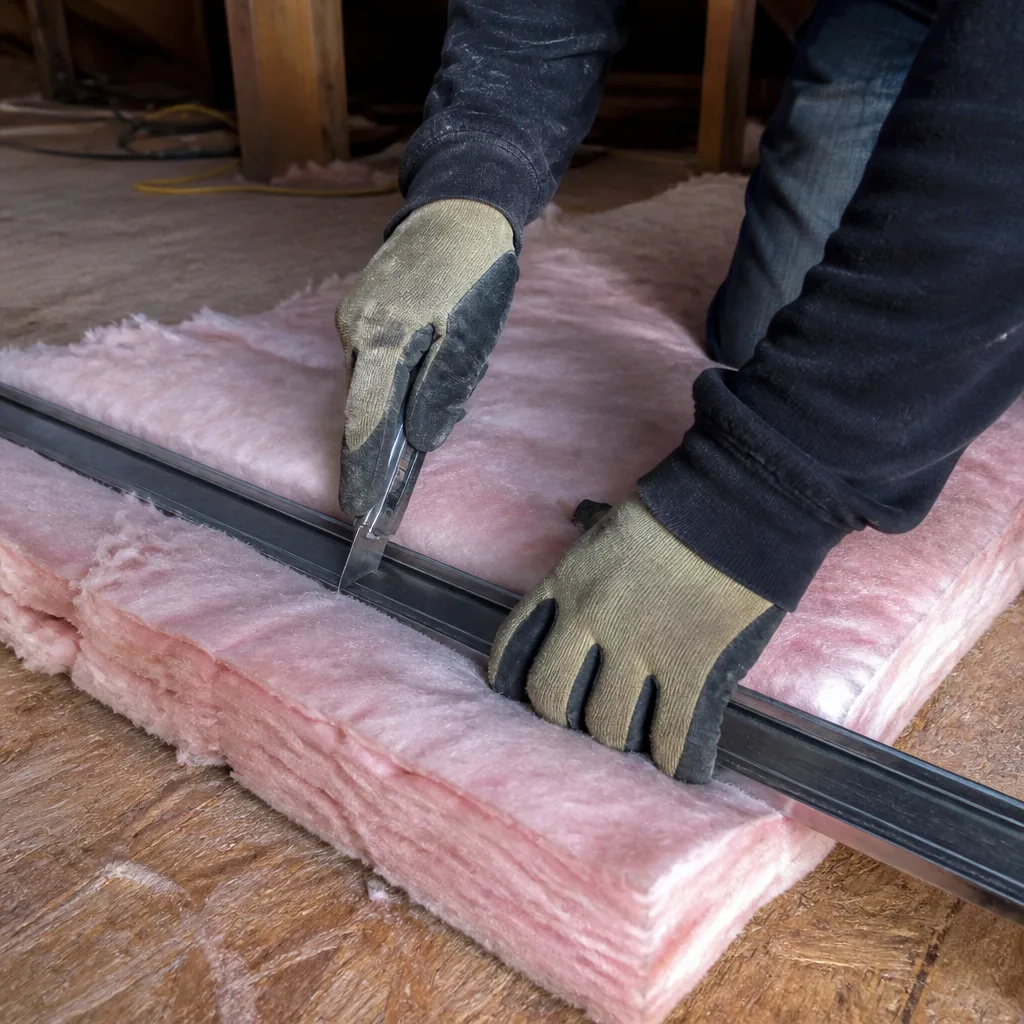
Batt insulation still has a place in La Habra, particularly in new additions, detached garages being converted to living space, and attic kneewalls where blown-in product won’t stay put. We install mineral wool batts from Rockwool in many of these applications — La Habra homeowners appreciate that it’s fire-resistant, holds its shape better than fiberglass under wind turbulence, and actually improves soundproofing between rooms. Batts also make sense for attic access doors and scuttle holes, where blown-in material tends to shift every time you lift the panel.
Attic Insulation Top-Up
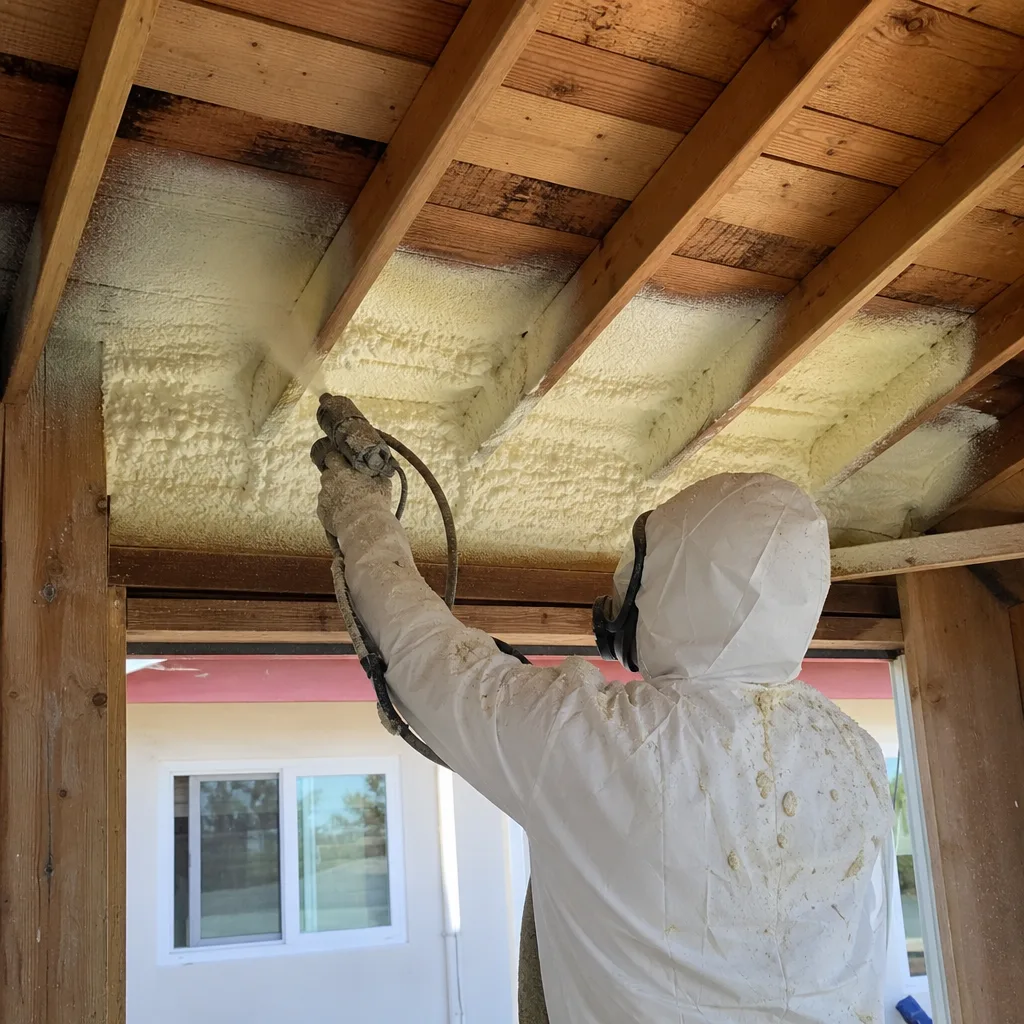
Topping up works when your existing insulation is clean, dry, and simply under-specified. Plenty of La Habra homes were built with R-11 batts and have never been touched since, but if the material hasn’t settled badly or been chewed through, we can blow additional insulation right over the top to bring the assembly up to current code. A top-up job on a 1,200 sq ft attic in La Habra typically runs $1,800–$2,700, considerably less than full replacement. We’ll tell you honestly whether your existing material qualifies or whether you’re throwing money at insulation that’s already compromised.
Attic Insulation Replacement
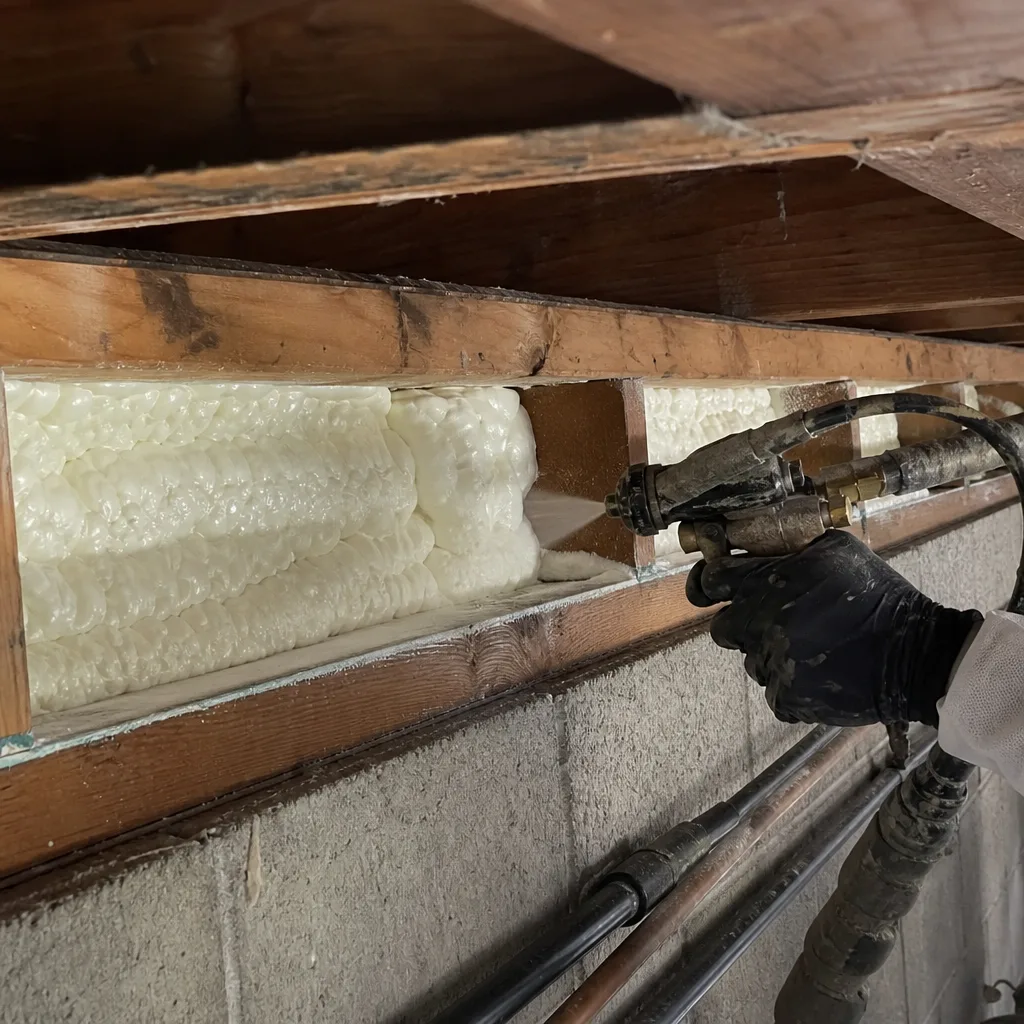
This is the service we perform more than any other for La Habra homeowners. The original fiberglass batts in homes from the 1950s through the 1970s were rated R-11 or below when new, which was the cheapest option available at the time. After 50 to 70 years of Santa Ana wind pulses through soffit vents, along with the occasional roof rat colony and periodic roof leaks, that material has often compressed to half its original thickness or less. Full replacement means removing everything down to the ceiling drywall, inspecting and air-sealing every penetration, then installing new insulation to current R-38 or R-49 standards. La Habra homes built before Title 24 was adopted in 1978 simply had no attic insulation code requirement, so replacement is almost always the right call rather than a top-up.
Attic Baffles & Ventilation Prep
Insulation only works if air moves correctly through your attic, and in La Habra’s wind-exposed homes, that’s frequently not happening. Attic baffles — the channels that keep insulation from blocking soffit vents — were often never installed in original construction, or they’ve been dislodged and crushed over decades. We check and replace baffles on every insulation project, ensuring that the soffit-to-ridge ventilation path stays open. This matters more on the northern La Habra hillside, where Santa Ana wind pressure against soffits carries dust and debris into attics and physically displaces insulation batts. Good baffles and proper ventilation prep are the difference between insulation that performs for 30 years and insulation that fails again in five.
What happens when you call
- 1
A real person answersNo phone trees — you reach a local pro.
- 2
You get an upfront price rangeHonest numbers before anyone is dispatched.
- 3
A background-checked tech heads outLicensed & insured, dispatched right away.
- 4
You approve before work beginsNothing starts until you say go.
Trusted Brands We Service in La Habra
We’re not tied to a single manufacturer, and that works in La Habra’s favor. Your attic might be best served by Owens Corning AttiCat blown-in fiberglass for a standard top-up, while a hillside home with moisture issues off Hacienda Road could be better matched to Rockwool mineral wool that won’t absorb winter condensation. We also install closed-cell spray foam from Icynene and Demilec when a La Habra attic needs air-sealing and insulation in a single step, particularly for homes with low-slope roofs where blown-in material would settle unevenly. Because we stock material specific to what La Habra attics actually need, we’re not stuck waiting on suppliers or pushing whatever’s on the shelf. Each project gets the material that matches your home’s conditions.
Common Attic Insulation Problems We See in La Habra Homes
- Santa Ana wind-compressed batts. Homes on La Habra’s northern streets backing the Puente Hills have measurably higher attic air infiltration. The wind actually channels through soffit vents and physically presses batts down, compacting them to half their rated R-value or less. We find this pattern on hillside properties off Harbor Boulevard over and over, while flat-street homes a few blocks south look completely different.
- Settled and moisture-wicked fiberglass from the 1950s–70s. The original insulation in La Habra’s tract homes was thin to begin with, and decades of winter condensation have caused it to settle and absorb moisture from ceiling joists. That leads to mold blooms along the framing and insulation that’s doing almost nothing in the summer.
- Rodent damage in attics and crawl spaces. Roof rats and mice are a fact of life in La Habra, particularly in older wood-frame homes with open eaves. They tear through fiberglass batts to build nests, leave droppings that contaminate the insulation, and create bare spots over living areas. Once rodent damage is present, topping up does nothing — the contaminated material needs full removal and replacement, followed by rodent-proofing.
- Missing or crushed soffit baffles blocking ventilation. La Habra’s original tract homes frequently went up without baffles at all, and any that were installed have often been crushed flat by previous attic work. Without that air channel, your attic can’t breathe, and summer heat builds up to destructive levels. A 1950s attic without working baffles can hit 150°F and radiate that heat straight into your bedrooms.
Pricing for Attic Insulation in La Habra, CA
Full attic insulation replacement in La Habra runs $1.85–$3.40 per square foot of attic floor, with most postwar homes falling between $2,600 and $4,750 total. Blown-in top-up jobs run $1,800–$2,700 for a typical 1,200–1,500 sq ft attic. Batt insulation installation runs $1.60–$2.80 per square foot, and attic baffle replacement with ventilation prep adds $450–$900 depending on eave access. Homes on the northern hillside requiring additional wind stabilization for insulation typically add 10–15% to the project total. These are real ranges from jobs we’ve completed in La Habra, not generic Orange County averages. The best way to get an exact number is a free attic inspection — we’ll show you photos of what’s actually in your attic and give you a written quote before any work starts. Call (714) 793-0570 and we’ll schedule a visit to your home usually within a couple of days.
We Also Serve Cities Near La Habra
Coastal Insulation Santa Ana handles attic insulation projects throughout north Orange County and beyond. Beyond Attic Insulation in La Habra, we work regularly in Brea, Placentia, Buena Park, and La Palma, plus the surrounding neighborhoods. If you’re in one of these areas and your attic needs attention, the same owner-led crew handles your job. Call (714) 793-0570 and mention where you’re located.
Serving La Habra, CA — Our Local Coverage Area
We’re based in the La Habra area and know this community well. Use the map below to see our service coverage — if you’re nearby, we can almost certainly help.
FAQs — Attic Insulation in La Habra
Because La Habra sits inland at the base of the Puente Hills and misses the marine layer that cools Fullerton and Anaheim, making summer attic temperatures routinely exceed 140–150°F, while Santa Ana winds in fall and winter drive hot, dry air through every unsealed penetration in your ceiling and eave. Insulation here has to resist both radiant heat gain from above and wind-driven infiltration from the sides. That’s why we specify both higher R-values and more thorough air-sealing on La Habra attics than we would in coastal cities, and why the right material choice matters more here than in most Orange County neighborhoods. If your attic hasn’t been touched since the house was built, it’s failing at both jobs. Call (714) 793-0570 for an honest assessment.
You need replacement if the existing material is compressed below half its original thickness, shows any visible moisture staining or mold, has rodent droppings or nesting material throughout, or has settled below the top of the ceiling joists. Original R-11 batts in La Habra homes that have been through 60 years of Santa Ana wind cycles are almost always in that condition. Topping off works only when the existing insulation is clean, dry, and structurally intact — if we climb into your attic and find flattened, greasy, droppings-laced batts, adding new material on top just buries the problem. The inspection tells us which path you’re on, and we’ll always show you photos so you can see exactly what we’re seeing. Call (714) 793-0570 to schedule one.
Yes. Homes backing up to the Puente Hills slope — particularly those on streets like Harbor Boulevard, Walnut Street, and Highlander Avenue near the northern city limits — get Santa Ana wind pressure channeled directly against their soffits, which pushes dust and debris through the eave vents and physically displaces insulation batts. On a 1958 tract home off La Habra Boulevard, our crew found original R-11 fiberglass batts that had settled to less than 4 inches under years of Puente Hills wind, leaving the master bedroom ceiling at 112°F in July. We pulled the degraded material, air-sealed the soffit baffles, and blew in Owens Corning AttiCat to R-38, after which the homeowner reported a $68 drop in August cooling costs. Those hillside homes need reinforced baffles and sometimes additional wind-blocking measures at the eave line before any new insulation goes in. Flat-street homes south of Whittier Boulevard rarely need that level of wind prep.
Yes, and in La Habra the difference is larger than the Orange County average because pre-1978 homes here were built with no attic insulation code at all, and the local climate punishes that harder. Most La Habra tract homes from 1948–1978 went up with R-11 batts or nothing but a scattering of loose fill, while current California code requires R-38 at minimum. Bringing a typical 1,400 sq ft La Habra home from settled R-11 to a properly air-sealed R-38 or R-44 typically changes cooling and heating costs by a noticeable margin — the hottest summer rooms stop being 10–15°F warmer than the rest of the house, and the heater stops running as long during Santa Ana cold snaps. We don’t promise a specific savings percentage because it depends on your home’s orientation, window area, and existing air leaks, but we have La Habra customers who’ve reported $60–$80 drops in their August bills after a single attic replacement. Call (714) 793-0570 and we’ll walk you through what your specific house is likely to gain.
Blown-in fiberglass or cellulose is almost always the best match for La Habra’s postwar tract homes, because the joist spacing in these houses was rarely consistent enough for pre-cut batts to fit tightly. Gaps between batts and framing become airflow channels that let hot air pour into your living space in summer and heated air escape all winter. Blown-in insulation fills all those irregularities completely, including around electrical boxes and plumbing penetrations that would otherwise stay uninsulated. For hillside homes with moisture concerns, we sometimes specify mineral wool batts from Rockwool in specific sections where condensation resistance matters. We’ll make that call after seeing your attic, and we’ll explain the “why” behind the recommendation. The right answer depends on your roof profile, eave design, and whether you have old knob-and-tube wiring that affects what can safely be installed.
Get Your La Habra Attic Insulation Fixed Right
If your La Habra home was built before 1978 and the attic hasn’t been touched since, you’re paying more than you should be for air conditioning every summer — and your upstairs bedrooms know it. Ruben Castellano and the team at Coastal Insulation Santa Ana handle every phase of the job, from the initial attic inspection through tear-out, air-sealing, installation, and cleanup. No crew you’ve never met, no subcontractor who doesn’t know the plan. Call (714) 793-0570 today for a free attic inspection and a written quote for your home, or to schedule a visit. We’re in La Habra every week, and we’d rather show you what’s in your attic than have you wonder about it through another hot season.
Written by Ruben Castellano, Owner at Coastal Insulation Santa Ana, serving La Habra and surrounding North Orange County communities.